We don't justtalk about AI.We put modelsinto production.
Kaylo is an applied-AI studio. We build deep-learning models, agentic systems, and the MLOps pipelines that keep them accurate — engineered into the way your business already works.
Everyone is selling artificial intelligence. We're interested in the AI that actually ships.
Most AI projects die as a demo that impressed once. The hard part was never the prototype — it's the accuracy you can defend, the false positives you can't afford, and the pipeline that keeps a model honest months after launch. We build for that line — the one between a clever notebook and a system production depends on.
Six ways we partner
with your team.
From a single agent that solves one painful workflow to custom ML models and full data infrastructure — we meet you where the work is.
Model Development & Deep Learning
Deep-learning models tuned for your data and benchmarked past 97% accuracy — with a deliberately low false-positive rate, because in production a wrong “yes” usually costs more than a missed one.
Talk to us →Agentic AI Systems
Multi-agent systems that plan, use tools, and take real actions across your stack — escalating to a human only when judgment is genuinely required. Not a chat window wearing your logo.
Talk to us →RAG & Context Engineering
Retrieval pipelines and disciplined context engineering that keep LLMs answering from your truth — with citations, guardrails, and evaluation instead of confident hallucination.
Talk to us →LLM Fine-Tuning & Optimization
Fine-tuning, distillation, and rigorous evaluation that shape frontier models to your domain, vocabulary, and cost target — a smaller model that beats a giant one on the task that matters.
Talk to us →MLOps & Production Pipelines
The pipelines, monitoring, and retraining loops that keep a model accurate long after launch — drift detection, versioning, and observability so you trust what runs unattended.
Talk to us →Conversational AI & Chatbots
Assistants grounded in your live systems that answer and act — booking, updating, routing — across web, voice, and chat. They sound like you and stay accurate as your business changes.
Talk to us →Numbers we've put into production.
Proof, not promises.

Tier-1 and tier-2 tickets that close themselves
A multi-channel agent network that reads the ticket, checks live systems, and resolves the routine majority on its own — routing only the genuinely hard cases to a human, and getting sharper with every conversation it closes.
The back office that runs while the team sleeps
Agents that match invoices to POs, reconcile vendor statements, and assemble the weekly report — operating inside the ERP and inbox your team already lives in, with no rip-and-replace.

Ask the data a question, get the chart back
A natural-language layer over your warehouse: type the question, watch it resolve into the right chart, drill in, and export — so revenue and finance stop queuing behind the data team for every cut.

From 800 résumés to a shortlist by morning
Screening, scoring, scheduling, and interview-feedback synthesis stitched into one pipeline — every shortlist gated by a recruiter sign-off, so speed never costs you the human call.

The machine warns you it will fail — two days early
Streaming sensor pipelines feed an anomaly-detection model that catches the drift before the breakdown — turning 3 a.m. line-down emergencies into a part quietly ordered on a Tuesday.

Detection model at 98.2% accuracy
Replaced a brittle rules engine with a deep-learning classifier tuned for the asymmetric cost of a wrong "yes" — wrapped in an MLOps pipeline with drift detection.

Grounded retrieval over 2M documents
A production RAG system answering from a firm's own corpus with citations, guardrails, and zero hallucinated precedent.
A 7B model that beat the frontier API
Fine-tuned and distilled an open model on a client's support history — matching a frontier API on their task at a fraction of the cost per call.

Damage detection at the dock
A vision model flagging shipment damage from a phone photo — turning a manual inspection queue into an instant decision.

From notebooks to a real pipeline
Replaced a sprawl of one-off scripts with a versioned, monitored MLOps pipeline — the foundation every model the team ships now runs on.

Multi-step agent that never misses a step
A multi-agent system that reads, decides, and acts end-to-end across a client's CRM and billing tools — escalating to a human only when judgment is genuinely required.

Support bot that closes the loop
A grounded assistant that answers from live product data, takes action in the OMS, and hands off complex cases — fully on-brand, zero hallucination.
Client names and full metrics are published as engagements complete — never before they're earned.
See all case studies →We earn the accuracy before we ship it.
A model is only as good as the problem it's pointed at. We go deep into the data and the workflow before we choose an architecture — because most accuracy is won or lost there.
We benchmark relentlessly against a metric that reflects your real cost — not just headline accuracy, but precision, recall, and the false-positive rate the business actually pays for.
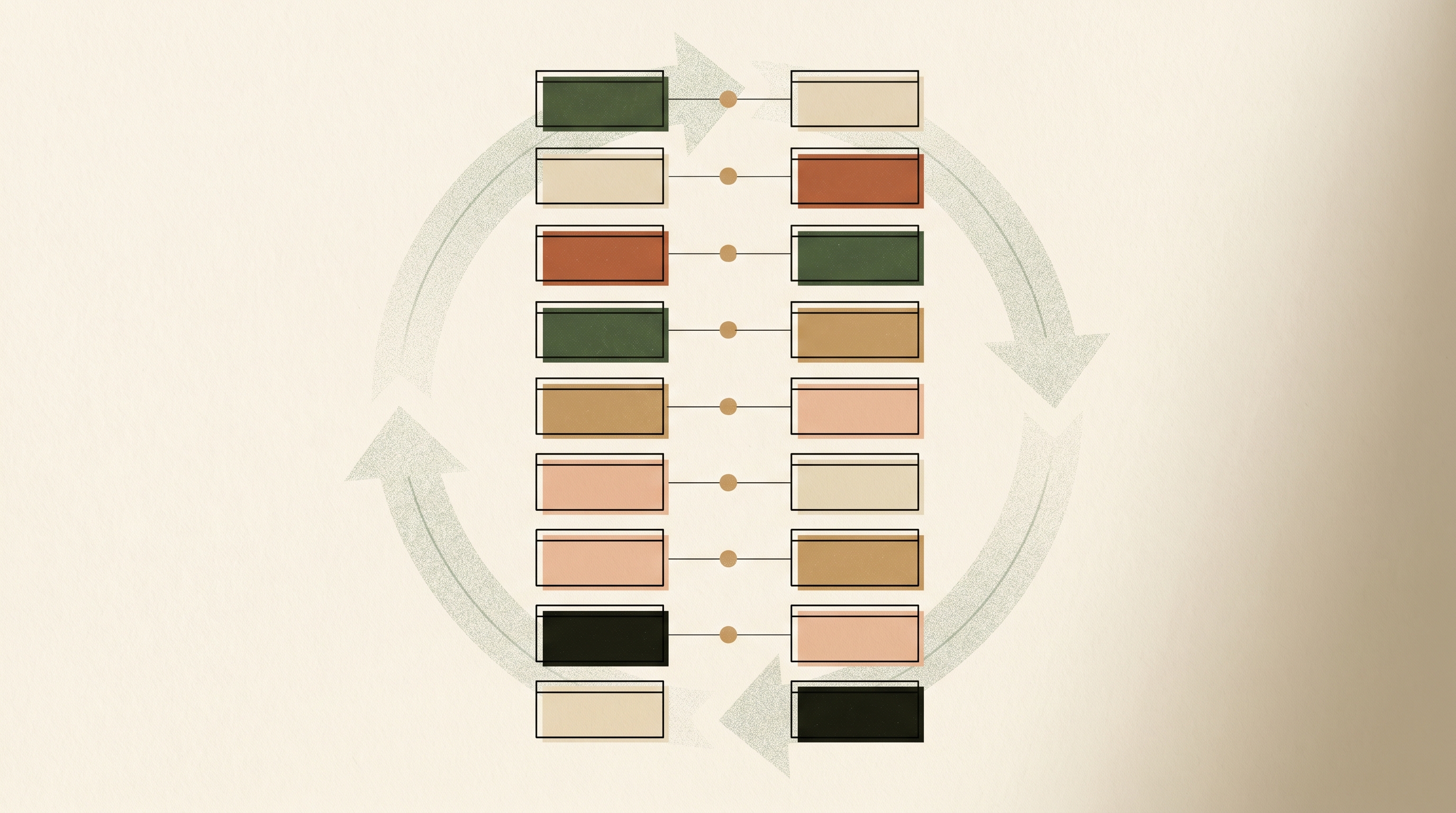
And we don't hand over a notebook and wish you luck. Every model ships with the MLOps around it — monitoring, drift detection, and a retraining loop — so the number we promise on day one is still true on day three hundred.
High-stakes decisions where a wrong answer is expensive — fraud and risk scoring, document understanding, and multi-step agent workflows. Domains where measured accuracy and low false positives quietly change the economics of every decision.
How an engagement actually runs.
Frame the problem
We define success in your terms — the metric, the cost of a false positive, the threshold that makes it worth shipping.
Build & benchmark
We prototype fast, then push the model past your accuracy bar — proving value against real data, not a curated demo set.
Ship to production
We deploy with the pipeline around it — versioning, monitoring, and guardrails — so it runs reliably the day it goes live.
Monitor & compound
Drift detection and retraining keep accuracy where we promised — and every build becomes reusable intelligence for the next one.
In the words of the people we build for.
Kaylo didn't hand us a notebook and disappear. The model shipped with monitoring, and the accuracy they quoted is still the accuracy we see in production — six months later.
Most agencies show you a slide. Kaylo showed up obsessing over our false-positive rate. Six weeks later the detection agent was running in production.
They treated our messy data like a feature, not a problem. The fine-tuned model they shipped does the work of a team — and we own the weights.
We'd burned two agencies on RAG before Kaylo. They were the first team that talked about evaluation first — and the first whose system actually answered from our data instead of making things up.
Tell us the decision you wish AI could get right.
No pitch deck, no jargon. Just a conversation about the model, pipeline, or agent you need — and whether we can hit the accuracy bar that makes it worth shipping.